
Introduction
The terms equity and equality are often used interchangeably, but they represent different approaches to fairness and opportunity. Understanding the distinction is important in education, workplaces, healthcare, and public policy.
What is equality?
Equality means giving everyone the same resources, opportunities, or treatment regardless of their circumstances. The idea is that everyone should start from the same position and receive identical support. For example, a company may provide all employees with the same professional development budget. Equality promotes consistency and can be easier to implement because everyone is treated the same way.
Its pros are:
- Easy to understand and apply.
- Promotes consistency and equal treatment.
- Reduces the risk of favouritism.
But its cons are:
- Ignores individual differences and barriers.
- May not address existing disadvantages.
- Can result in unequal outcomes despite equal treatment.
But what are the challenges of equality?
However, equality has limitations. People do not always begin from the same starting point. Some individuals may face barriers such as disabilities, socioeconomic disadvantages, or lack of prior experience. In these situations, providing the same resources to everyone may not lead to fair outcomes.
Therefore, what is equity?
Equity, on the other hand, focuses on fairness by recognising that different people have different needs. Instead of giving everyone the same support, equity provides resources based on individual circumstances to help achieve comparable outcomes. For example, in a classroom, students with learning disabilities may receive additional tutoring or accommodations to help them succeed alongside their peers.
Its pros are
- Addresses specific needs and challenges.
- Promotes fairer outcomes.
- Helps reduce systemic inequalities.
But its cons are:
- Can be more complex and costly to implement.
- May be perceived as unfair by those receiving less support.
- Requires careful assessment of needs and circumstances.
Real-World Examples
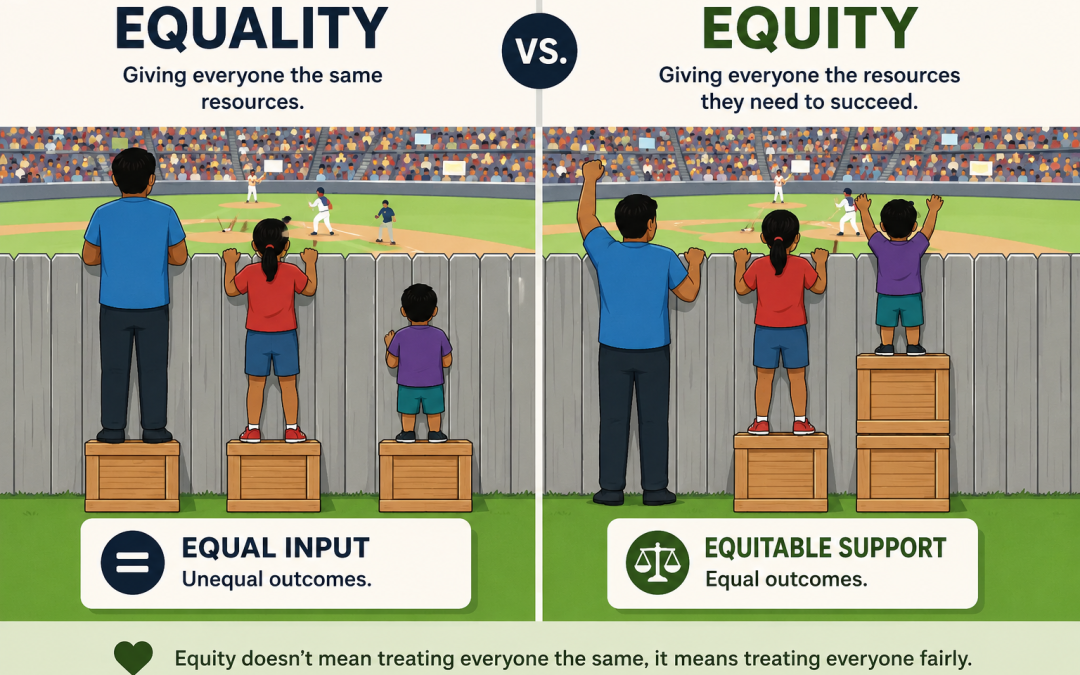
Consider three people trying to look over a fence to watch a sporting event. Under equality, each person receives the same-sized box to stand on. While this seems fair, the shortest person may still be unable to see over the fence. Under equity, each person receives the support they need, perhaps larger boxes for shorter individuals and none for the tallest person, so everyone can enjoy the view.
Similarly, in the workplace, equality might mean offering the same work schedule to all employees. Equity could involve flexible schedules for employees with caregiving responsibilities or disabilities, enabling them to perform effectively.
To conclude
In conclusion, equality focuses on providing the same resources to everyone, while equity focuses on providing the right resources based on individual needs. Both approaches aim to promote fairness, but equity often goes a step further by addressing barriers and creating more inclusive outcomes.
Recent Comments