
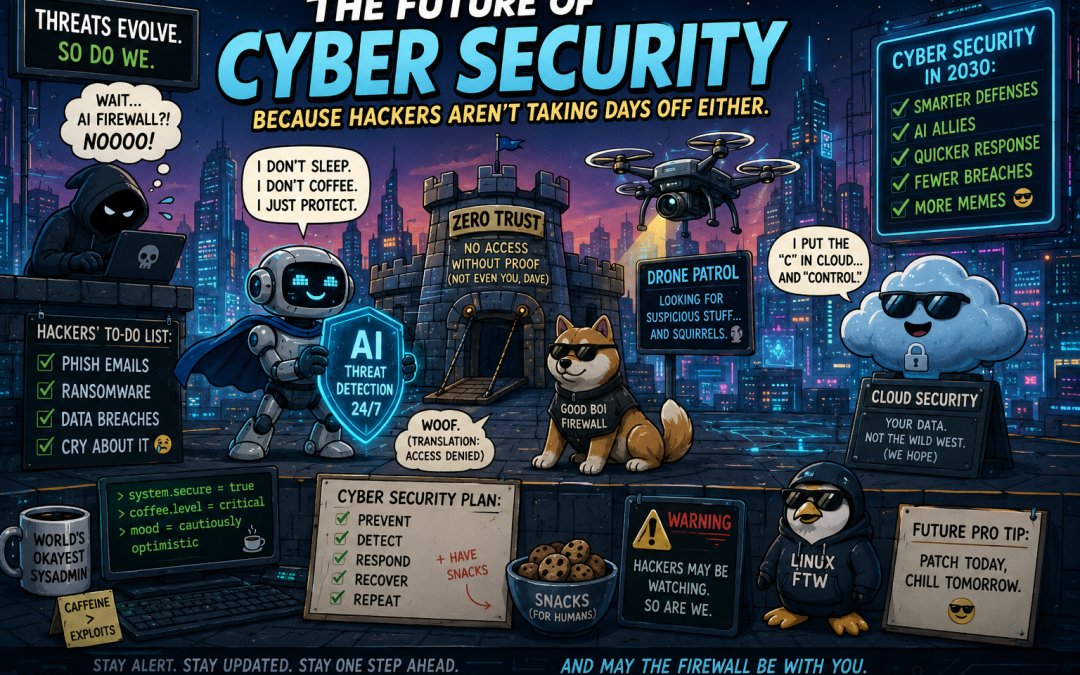
Introduction
As businesses, governments, and individuals become increasingly dependent on digital technologies, cybersecurity has evolved from a niche IT concern into a global strategic priority. Every day, billions of people rely on digital systems for communication, banking, healthcare, shopping, entertainment, and work. While this connectivity has created unprecedented opportunities, it has also exposed organisations and individuals to a growing range of cyber threats.
From ransomware attacks and data breaches to state-sponsored cyber warfare and AI-powered scams, the cybersecurity landscape is becoming more complex and dangerous. As a result, cybersecurity is now one of the fastest-growing sectors in the global technology industry.
But what exactly is cybersecurity, how large is the market today, and what does its future look like?
What Is Cybersecurity?
Cybersecurity refers to the technologies, processes, and practices used to protect computer systems, networks, devices, and data from unauthorised access, theft, damage, or disruption.
The primary goal of cybersecurity is to safeguard digital assets while ensuring the confidentiality, integrity, and availability of information.
Cybersecurity encompasses a wide range of disciplines, including:
- Network security
- Cloud security
- Endpoint protection
- Identity and access management
- Data encryption
- Application security
- Threat intelligence
- Incident response
- Security monitoring
- Cyber risk management
Modern cybersecurity solutions help organisations defend against a variety of threats, including:
- Malware
- Phishing attacks
- Ransomware
- Insider threats
- Distributed Denial of Service (DDoS) attacks
- Data breaches
- Advanced persistent threats (APTs)
As digital transformation accelerates, cybersecurity has become a critical component of business operations across virtually every industry.
Current Market Size and Growth
The cybersecurity industry has experienced remarkable growth over the past decade. Global cybersecurity spending is estimated to exceed $220 billion annually, with forecasts suggesting the market could surpass $500 billion by the mid-2030s. The sector is expected to maintain strong double-digit growth rates as organisations continue investing in security infrastructure.
Several factors are driving this expansion:
- Rising Cybercrime – Cybercrime has become one of the world’s largest criminal industries. Global cybercrime damages are projected to reach trillions of dollars annually, affecting businesses, governments, and consumers alike.
- Cloud Adoption – As organisations migrate data and applications to cloud environments, demand for cloud security solutions continues to rise.
- Remote and Hybrid Work – The shift toward remote working has expanded the attack surface for many organisations, increasing demand for endpoint protection, secure access solutions, and identity management systems.
- Regulatory Requirements – Governments worldwide are introducing stricter data protection and cybersecurity regulations, forcing organisations to strengthen their security capabilities.
- Artificial Intelligence – Both attackers and defenders are increasingly using AI, creating a technological arms race that is accelerating cybersecurity investment.
Today, cybersecurity spending is no longer viewed as optional. It is increasingly considered a core business necessity.
Advantages of Cybersecurity
There are several advantages:
- Protection Against Financial Losses – Cyberattacks can result in substantial financial damage through fraud, operational disruption, legal costs, regulatory fines, and reputational harm. Effective cybersecurity helps reduce these risks and protects business continuity.
- Safeguarding Sensitive Data – Organisations store vast amounts of sensitive information, including customer records, financial data, intellectual property, and employee information. Cybersecurity measures help ensure that this data remains protected from theft or misuse.
- Increased Customer Trust – Consumers are increasingly aware of privacy and security concerns. Companies that demonstrate strong cybersecurity practices often enjoy higher levels of customer confidence and loyalty.
- Regulatory Compliance – Many industries operate under strict security and privacy requirements. Cybersecurity programmes help organisations comply with regulations while reducing legal and financial exposure.
- Business Continuity – Cybersecurity solutions help organisations maintain operations during cyber incidents by preventing disruptions and enabling rapid recovery when attacks occur. In a digital economy, maintaining uninterrupted access to systems and data is essential.
Challenges and Disadvantages
Despite its importance, cybersecurity presents several challenges.
- High Costs – Building and maintaining robust cybersecurity programmes can be expensive. For smaller businesses, these costs can be difficult to manage.
- Skills Shortage – The cybersecurity industry faces a significant talent gap. Demand for skilled cybersecurity professionals continues to outpace supply, creating hiring challenges for organisations worldwide. This shortage can leave businesses vulnerable to attacks.
- Constantly Evolving Threats – Cybercriminals continuously develop new techniques to bypass security controls. Defensive strategies that work today may become ineffective tomorrow, requiring organisations to constantly adapt.
- Operational Complexity – Modern IT environments are increasingly complex. Organisations often manage. Securing these interconnected systems presents significant challenges.
- Sense of Security – No cybersecurity solution can guarantee complete protection. Even organisations with sophisticated security programmes can experience successful attacks. Overconfidence can sometimes lead to inadequate preparation for emerging threats.
Emerging Technologies Shaping Cybersecurity
The future of cybersecurity will be heavily influenced by technological innovation. Several emerging technologies are expected to redefine how cyber threats are detected and mitigated.
- Artificial Intelligence and Machine Learning – AI is becoming one of the most important tools in cybersecurity. Advanced systems can analyse massive volumes of data in real time, identify suspicious behaviour, and respond to threats faster than human analysts. However, cybercriminals are also using AI to create more sophisticated attacks, including highly convincing phishing campaigns and malware.
- Zero Trust Security – Traditional security models assume users inside a network can generally be trusted. Zero Trust takes the opposite approach. Many experts believe Zero Trust will become the standard cybersecurity framework of the future.
- Quantum Computing – Quantum computing presents both opportunities and challenges. While quantum systems could eventually improve encryption and security analysis, they may also threaten current encryption standards by dramatically increasing computational power. Governments and technology companies are already investing in quantum-resistant cryptography to prepare for this possibility.
- Cybersecurity Automation – Security operations are becoming increasingly automated. As cyber threats increase, automation will become essential for maintaining effective defence strategies.
The Future of Cybersecurity
Looking ahead, cybersecurity is expected to become even more critical as digital technologies continue to expand.
Several major trends are likely to shape the future:
- More Connected Devices – The growth of IoT devices, smart homes, connected vehicles, and industrial automation systems will create new security challenges and opportunities.
- Stronger Government Regulation- Governments are likely to impose stricter cybersecurity requirements on critical infrastructure providers and businesses handling sensitive data.
- AI-Powered Defence Systems – Future security platforms will increasingly rely on AI-driven threat detection and autonomous response capabilities.
- Greater Focus on Human Risk – Many successful cyberattacks exploit human behaviour rather than technical vulnerabilities. Future cybersecurity strategies will place greater emphasis on employee awareness, behavioural analytics, and identity protection.
- Cybersecurity as a Competitive Advantage – Businesses with strong security practices may gain a significant advantage by earning customer trust and demonstrating resilience in an increasingly digital marketplace.
Conclusion
Cybersecurity has become one of the most important pillars of the modern digital economy. As cyber threats grow in scale, sophistication, and frequency, organisations must continually invest in technologies, people, and processes that protect their digital assets.
The industry is already worth hundreds of billions of dollars globally and is expected to grow substantially over the coming decade. Advances in artificial intelligence, automation, Zero Trust architectures, and quantum-resistant security solutions will transform how organisations defend themselves against emerging threats.
While challenges such as rising costs, talent shortages, and evolving attack techniques remain significant, the future of cybersecurity is likely to be defined by innovation, resilience, and increasingly intelligent defence systems.
In a world where nearly every aspect of life is becoming digital, cybersecurity is no longer simply an IT function; it is a fundamental requirement for economic stability, national security, and business success.
Recent Comments