
Introduction
History has an interesting habit of repeating itself when transformative technologies arrive. New technology creates genuine economic opportunities, attracts huge amounts of investment and changes the way businesses operate. But it can also generate excessive optimism, speculation and, eventually, painful market corrections.
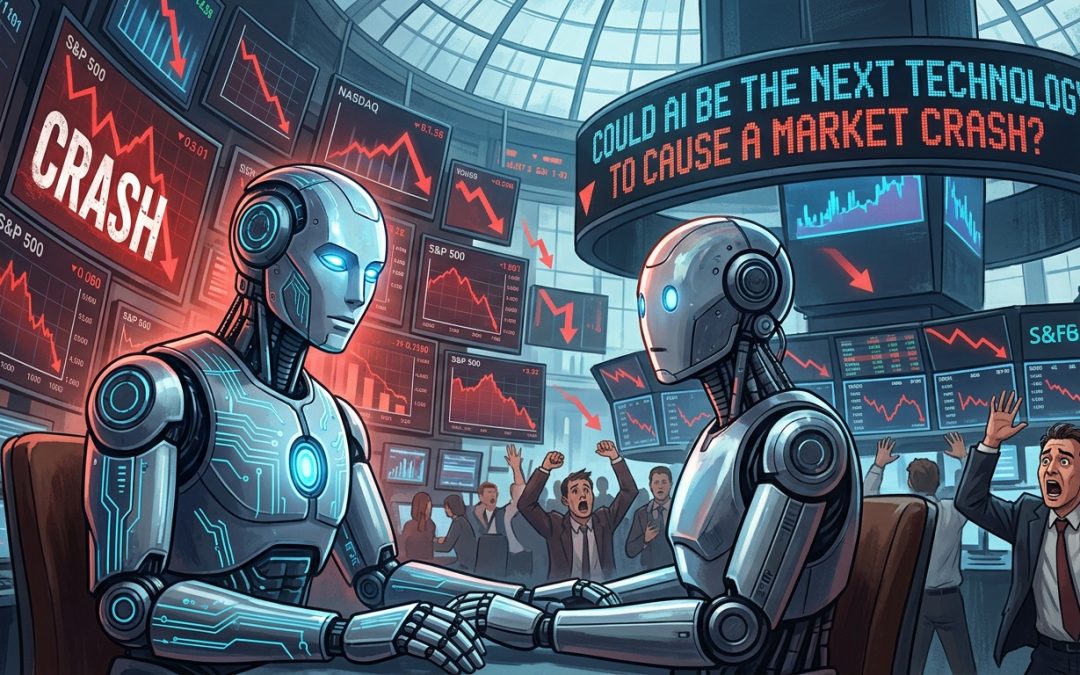
Could artificial intelligence (AI) be the next example?
The answer is not necessarily that AI is a bubble. In fact, that would be too simplistic. AI is clearly a transformative technology, with the potential to change productivity, employment and entire industries. The more interesting question is whether investors have already priced too much of AI’s future success into today’s markets.
History provides some useful warnings.
British Railways in the 1840s
During Britain’s Railway Mania of the 1840s, investors recognised that railways would transform transportation and commerce. They were right. Railways genuinely changed the economy. But enormous amounts of capital flowed into railway companies and projects, and valuations became disconnected from realistic commercial returns. When confidence collapsed, many investors suffered significant losses.
Technological boom of the 1920s
The same pattern appeared in different forms during the technological boom of the 1920s. Electricity, radio and the automobile were transforming society and industry. Investors became increasingly convinced that the new technologies would create enormous wealth. The technology was real, but speculation became excessive. The Wall Street Crash of 1929 demonstrated that genuine technological progress does not prevent financial markets from becoming overvalued.
Dot.com boom of the 1990s
The most obvious modern comparison is the dot-com boom of the 1990s. The internet genuinely changed the world, but investors became willing to pay extraordinary prices for companies with little revenue and, in many cases, no profits. When expectations changed, technology stocks collapsed.
Yet there was a remarkable irony: the internet revolution was correct. The technology ultimately became even more important than many investors had imagined. The mistake was paying too much for companies simply because they were associated with the internet.
So what about AI then?
That is where AI becomes particularly interesting.
AI is already attracting enormous investment in data centres, processors, software, energy and infrastructure. Major technology companies are committing billions to developing AI capabilities, while investors are assigning very high valuations to companies expected to benefit from the technology.
There are good reasons for this optimism. AI could transform financial services, manufacturing, healthcare, professional services and almost every other major industry. It could deliver significant productivity improvements and create entirely new products and business models.
But success does not automatically justify any price.
Imagine that AI increases productivity by 20%, but investors have already priced in a 40% improvement. AI would have been enormously successful, yet AI-related shares could still fall dramatically because expectations had become too high.
This is the key lesson from previous technological revolutions: “A technology can be revolutionary, economically successful and still be a poor investment at the wrong price”.
There is also a potential systemic risk. Today’s AI investment boom is highly concentrated in a relatively small number of technology companies, while the construction of data centres and other infrastructure increasingly involves significant financing. If expectations suddenly change, falling technology valuations could affect pension funds, investment portfolios, lenders and the wider economy.
AI could also make markets move faster. As artificial intelligence becomes increasingly involved in investment decisions and trading, a sudden change in sentiment could potentially be amplified by automated systems reacting to the same information.
So, could AI be the next technology associated with a major market crash?
Yes, but not necessarily because AI fails. The greater danger may be that AI succeeds, but investors have become so enthusiastic that they have already priced in too much of that success.
Railways changed the world. Electricity changed the world. The internet changed the world. And yet investors still managed to lose enormous amounts of money betting on them.
The same could happen with AI.
The critical question for investors is therefore not “Will AI transform the world?” because it almost certainly will.
The question is: “How much of that transformation is already reflected in today’s asset prices?”
That may ultimately determine whether the current AI boom becomes one of the greatest investment opportunities of the modern era, or the next chapter in the long history of technological bubbles and financial crashes.
Recent Comments